People aren't only scanning Google's blue links for information anymore.
They're looking for quick answers in featured snippets, People Also Ask, voice assistants, AI Overviews, ChatGPT Search, and other tools powered by AI search engines.
Answer engine optimization (AEO) is the process of structuring content so systems can understand, extract, and present it in direct answers or cited responses. It also helps content address conversational queries and respond clearly to questions.
This guide explains how this approach works, how to improve visibility across search and conversational platforms, and how to measure whether your content is found or cited.
Answer engine optimization helps businesses prepare content for search systems that provide answers, not just links. This approach makes information easier to understand, extract, and present.
In practice, AEO adds an answer-focused layer to SEO, helping your brand appear as the answer or as a cited source.
People often want a quick response before deciding whether to visit a website. If your page clearly answers a pricing, definition, or how-to question, Google or an AI tool may use that information in the result.
That visibility can introduce your brand to people who haven't heard of you. A helpful answer also builds trust because users see your business connected to a specific question, rather than a vague promotional message. When the answer creates enough interest, qualified users may continue to your site, compare your offer, or contact your team.
This exposure can improve brand visibility even when it doesn't produce an immediate visit. It can be especially valuable for B2B marketers, whose buyers often need multiple interactions during longer purchasing journeys.
However, not every appearance produces a click. Featured snippets, AI Overviews, and other answer surfaces can satisfy a query directly. These are often called zero-click searches because the user gets the information without opening the source page.
A lower click-through rate doesn't always mean lower value. Being named in a useful answer can build awareness before a later branded search or purchase.
For example, a software company might publish a page answering, "How much does project management software cost?" Google could show a short excerpt, while an AI-generated response might summarize pricing factors and cite the company's page. Even when users don't click immediately, the brand becomes part of their consideration set.
Answer-focused visibility appears across several formats:
The key distinction is simple: a featured snippet usually selects an answer from one page, while generative tools synthesize information across multiple pages. Clear answers still matter, but accuracy, authority, authorship, and supporting evidence matter too.
SEO, AEO, and GEO support different visibility goals, but they share many fundamentals.
Traditional SEO focuses on rankings, impressions, clicks, and conversions from organic search results.
AEO focuses on providing direct answers that match a specific search intent, while GEO focuses on earning mentions or citations in AI-generated responses. AI SEO combines these practices into one approach, helping content remain discoverable in traditional search, appear in direct-answer features, and provide reliable information for generative AI tools.
The labels overlap across the industry. Focus less on debating definitions and more on the platform and result you want to earn.
AEO still depends on strong SEO. Search engines need to crawl and index your page before they can understand or use its content. Useful information, relevant internal links, topical coverage, a positive page experience, and trustworthy authorship also remain important.
The difference is how you package that information. An AEO-focused page should answer specific questions in clear sections, use question-based headings, and place concise responses near the top of each section. Lists, tables, definitions, and short paragraphs can also make information easier for a system to extract.
Google says its generative Search features, including AI Overviews and AI Mode, rely on its core Search quality and safety systems. Its guide to optimizing for generative AI features also confirms that standard SEO practices still apply. You don't need a separate website for every search format.
You need useful content that both people and search systems can understand.
AEO often targets answer extraction. For example, a page might answer "What is answer engine optimization?" in a 40-word definition that Google selects for a featured snippet.
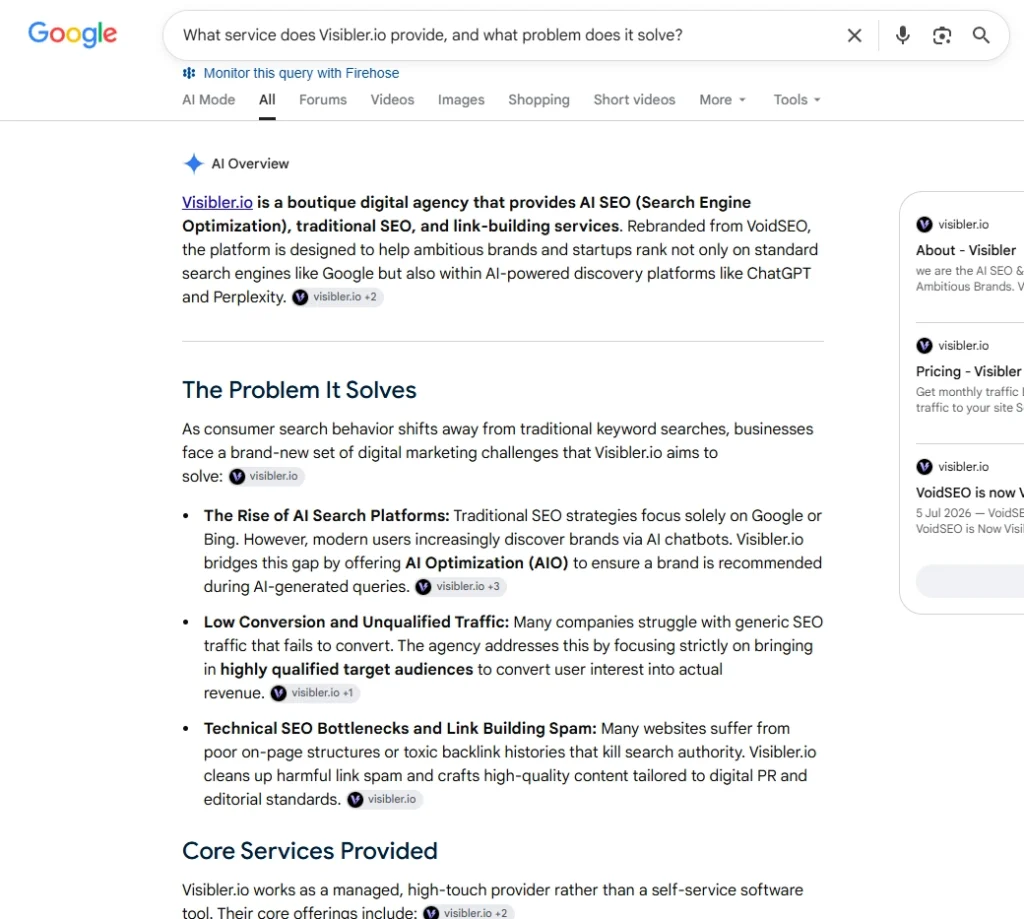
GEO (Generative Engine Optimization) focuses more on citation and inclusion. A generated overview may answer the same question by combining information from several pages. Your content might not appear as one exact passage, but Google could paraphrase it and cite your page alongside other sources.
The same page can support both goals. That overlap is useful for B2B marketers managing several visibility goals from one resource. Use a clear definition for answer extraction, then add evidence, context, authorship, and related details that make the page useful in a generated response.
A practical AEO strategy supports direct answers without sacrificing the depth and trust signals that GEO requires.
Answer engine optimization starts with the same foundation as established search practices. A page must be accessible, understandable, relevant, and trustworthy before an answer engine can use it. AEO has no guaranteed shortcut to AI visibility, special submission form, or separate optimization switch.
Search engines generally need to crawl and index a page before they can consider it for an answer. Google also says pages used in ai overviews and ai mode must be eligible to appear in Search with a standard snippet. Its guidance on AI features confirms that no additional AI-specific technical requirement guarantees inclusion.
Start with these technical SEO checks:
robots.txt isn't blocking important pages.noindex directives from content you want discovered.A page can contain an excellent answer and still remain invisible if crawlers can't access it or search engines exclude it.
Review Google's robots meta tag documentation when you need to check page-level indexing and snippet controls.
Once a page is eligible, its structure helps ai search engines identify what it says and which parts answer a query. Use descriptive headings, short paragraphs, direct definitions, numbered steps, relevant lists, and comparison sections. Put the answer close to the question instead of burying it beneath a long introduction.
For example, a heading such as "How Much Does Email Marketing Software Cost?" gives more context than "Pricing." A short paragraph below it can answer the question, while later sections explain plans, features, and limits.
Relevant schema markup can add context about a page, product, organization, or article. But structured data doesn't rescue unclear, inaccurate, or untrustworthy content. It supports understanding, while the visible page still needs to provide the evidence and explanation.
Google ai overviews and ai mode use supporting links from Google's search systems. Microsoft Copilot can provide source-grounded answers and in-text citations in supported experiences. ChatGPT Search and Perplexity AI also present conversational answers with citation links, while Google Gemini may use a different mix of generated context and web sources.
Their private selection systems aren't fully public, and real time search can change results and sources. Track the queries, platforms, devices, locations, and answer formats that matter to your audience. For b2b marketers, review whether your pages appear as cited sources across these experiences.
AEO starts with clear questions, direct answers, useful context, and trustworthy evidence. This answer engine optimization workflow helps readers and AI systems understand your content. Focus on people first, then make each section easy for search systems to interpret.
Find questions in customer conversations, sales calls, support tickets, Search Console queries, forums, People Also Ask, and related searches. For B2B marketers, these sources reveal conversational queries and guide content strategy through complex buying journeys.
Match the content format to search intent:
A question may have more than one intent, so review the current results before choosing a format.
Answer the exact question in the first one or two sentences. Then add context, examples, limits, and supporting evidence. This answer first structure gives readers a useful response immediately, while the rest of the section proves and expands the point.
For a section answering "What is AEO?", use this structure:
Keep the opening answer short enough to stand alone. Avoid vague introductions that make readers search through several paragraphs for the point.
Question-style headings give each section a clear purpose for readers and target surfaces such as ai overviews. Short paragraphs work well for definitions and direct facts, while bullets help readers scan features or requirements. Use numbered steps when the reader needs to follow a process, and comparison content when the query asks which option is better.
FAQs can address closely related questions, but don't add questions only to create more keywords. Use relevant schema markup and structured data guidance from Google when the page qualifies, and keep the visible content accurate.
Don't hide the answer inside a large block of promotional copy. Search systems and readers both need the useful information before the sales pitch.
Name the author, explain relevant experience, include accurate business information, and show when the content was reviewed or updated. Maintain entity consistency across author profiles, business details, and page content.
Add original examples, current dates, and specific figures. Support important claims with citation links to authoritative sources where appropriate.
These practices support helpful, people-first content and the experience, expertise, authoritativeness, and trustworthiness principles associated with E-E-A-T. Google's people-first content guidance supports this approach, but no single signal guarantees an AI citation. Accuracy and useful detail still come first.
Measure answer engine optimization with more than rankings and traffic. Track answer visibility, citations, brand visibility, and conversions together. A useful AEO process shows whether your content is being found, trusted, and acted on. Your AEO strategy should focus on trends, because one result rarely proves lasting visibility.
Start with priority queries based on your audience, products, funnel stages, and local seo needs. Record each query's purpose, platform, device, location, and review date. Then check whether a featured snippet, People Also Ask result, rich result, AI Overviews, AI Mode, or another answer feature appears.
For every check, record whether your page is visible, which domains are cited, citation links, citation position, and brand mentions. Citation rate measures how often your brand or URL appears across tracked prompts. Citation share compares your visibility with competitors, while mention frequency shows how often your brand appears without necessarily receiving a link.
Use private browsing to reduce personalization, but remember that results still vary by location, device, and time. Repeat the process across desktop and mobile where those audiences differ. Include manual checks in ChatGPT Search and Perplexity AI when comparing platforms. Prompt management tools can help organize recurring checks across priority queries.
Google Search Console can show useful impression, click, and query trends, but it may not separate AI activity from standard Web results. Compare answer features with visibility in organic search results. Google's guidance on AI features explains why manual checks and third-party monitoring remain useful.
Connect answer visibility with organic impressions, clicks, branded searches, leads, sales, referral traffic, engagement, and assisted conversions. B2B marketers should review funnel-stage performance, lead quality, and assisted revenue alongside visibility trends.
A citation can build trust without producing an immediate click. Someone may see your brand in an AI answer, search for it later, and convert through a branded query or direct visit. Track that assisted discovery with Search Console, analytics reports, CRM records, and other first party data, including customer surveys where possible.
A high citation rate still has limited value if the cited page doesn't meet the visitor's needs. Make sure it answers the next question, loads properly, supports its claims, and offers a clear path to contact or purchase.
Avoid these common mistakes:
robots.txt, noindex, canonicals, and internal links.Answer engine optimization builds on the SEO work your site already needs. A strong AEO strategy improves clarity, trust, and visibility across search results and AI answers. But the practice doesn't bypass crawlability, relevance, or competition.
No. AEO extends traditional SEO rather than replacing it. Your page still needs to be crawlable, indexable, useful, relevant, authoritative, and competitive in ordinary search results.
Clear answers may improve eligibility for featured snippets or AI citations, but those answers depend on a healthy page and a trustworthy website. Continue improving site structure, internal linking, content quality, authorship, and user experience.
No. Google hasn't provided special markup that guarantees visibility in AI Mode. Its guidance for generative AI features recommends using standard SEO practices instead.
Use schema markup when it accurately describes visible page content, such as a product, article, organization, local business, or FAQ. Structured data can help Google understand a page and qualify it for certain rich results, but it isn't a direct trigger for AI Overviews.
Yes. Small businesses can target narrow, local, and customer-specific questions where firsthand knowledge gives their content an advantage. A local plumber, for example, can explain emergency response times, service areas, permit requirements, and common repair costs.
Answer real questions with clear examples and accurate service details. Support local SEO with a complete Google Business Profile, consistent contact information, entity consistency across business listings, customer reviews, and evidence of relevant experience.
There isn't a standard timetable. Results depend on your site's authority, technical health, competition, content quality, and whether answer surfaces appear for your target queries.
Monitor changes over weeks and months, not after one search. A single AI citation can disappear as results change, so track recurring visibility, cited pages, branded searches, and qualified conversions.
Yes, but the production method matters less than the final result. Content must be accurate, original, useful, well-supported, and reviewed by people with relevant expertise.
This matters especially for B2B marketers, whose audiences often expect precise, verifiable information. Generic, repetitive, or inaccurate AI content can weaken trust and search performance. Add firsthand examples, verify every claim, identify the author, and revise the draft until it provides information readers can't get from a dozen similar pages.
Use Google Search Console for standard search impressions, clicks, queries, and page performance. Rank and SERP tools can help monitor featured snippets and People Also Ask results, while platforms such as Semrush AI Visibility, Ahrefs Brand Radar, OtterlyAI, and Perplexity AI can help track AI mentions and citations.
No single platform captures every answer experience. Combine tool-based reporting with periodic manual searches across relevant locations, devices, and platforms.
People still use search, but many now expect direct answers through featured snippets, ai overviews, voice assistants, and conversational tools
Answer engine optimization helps content meet that expectation by making useful information easy to understand, extract, and cite. It complements a strong content strategy rather than replacing established practices.
Start with a crawlable, indexable website and helpful, people-first content. Answer real questions directly, use clear headings and self-contained sections, support important claims with evidence, and apply accurate structured data where it fits.
Measure visibility alongside organic search results, impressions, clicks, referral traffic, branded searches, leads, and sales.
No tactic or markup guarantees that a platform will select your content. Clear, accurate, trusted information gives your page the best chance to appear when results become answers.

Visibler — Made with  in Malaysia
Level 33, Ilham Tower, No. 8, Jalan Binjai, Kuala Lumpur 50450, Malaysia